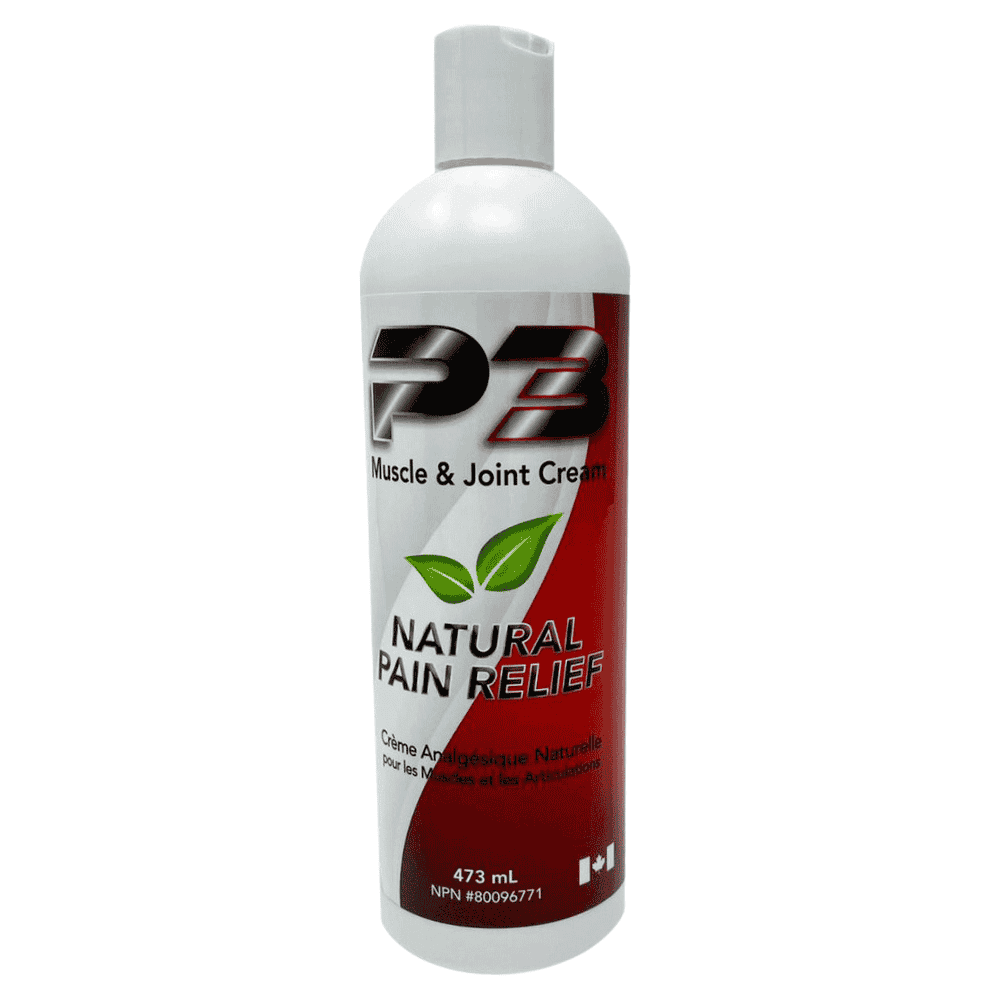
P3 Muscle & Joint Cream – 473mL
P3 Cream is a premium, therapist-recommended topical formula designed to ease muscle and joint discomfort.
$49.99
Description
P3 Cream: Prevention, Relief, and Performance
P3 Cream is a premium, therapist-recommended topical formula designed to ease muscle and joint discomfort. Created by a Canadian Registered Massage Therapist (RMT), it offers safe and effective pain relief.
Key Features:
- Made with natural active ingredients, alcohol-free, with a light mint fragrance
- Free from aspirin and parabens
- Helps relieve sore muscles, strains, sprains, arthritis, and joint discomfort
- Water-based formula that won’t dry the skin or leave greasy stains
- Alcohol-free to minimize irritation
- Contains calendula oil, a natural anti-inflammatory derived from marigold
- Mild peppermint aroma without an overpowering scent
Professional Applications:
- Ideal for manual therapy techniques such as friction massage, scar therapy, trigger point therapy, and pain management
- Commonly used in physiotherapy, massage therapy, chiropractic care, naturopathy, athletic therapy, kinesiology, and the fitness field
- Suitable for sports injuries, including strains and sprains
- Supports relief for rheumatoid and osteoarthritis
- Effective for muscle tension and soreness, appropriate for all ages and home use
Ingredient Overview:
P3 Cream is a water-based mint formulation containing water, peppermint oil, calendula oil, eucalyptus oil, phenoxyethanol, sodium acrylate copolymer, sorbitan mono oleate, colloidal silica, and tea tree oil.
Inactive Ingredients:
- Phenoxyethanol: A widely used, safe preservative found in many cosmetic products
- Sodium acrylate copolymer: A thickening agent commonly used in baby shampoos
- Sorbitan mono oleate: A cosmetic-grade emulsifier also used in food products to bind ingredients
- Colloidal silica: A stabilizer that maintains product consistency
Creating a completely all-natural formula can be challenging. P3 Cream includes natural active ingredients, while minimal levels of synthetic components are used as inactive agents to ensure stability and preservation. Synthetic preservatives are often more stable and effective at lower concentrations, helping maintain product purity and quality.
You May Also Like